Friday, 18 April 2014

Freedom


A house made of glass. I don't feel exposed, as I did the last time I was here on my own. I feel liberated, safe, happy. I am surrounded by nature, fields on top of the hills, pines on the dark slopes of the river valleys. From my bed I see the star studded sky, clear and bright, not polluted by big city lights, the village opposite a string of Christmas lights. They seem within touching distance, but there is a rock faced canyon and a river between my bed and the village. I can bathe watching the sunset, candles on the bath end, enjoying the view through this glass wall. A stray dog walker, just below the house on the hill, can't see through these windows. Still, it seems scary. I feel like an exhibitionist. When I wake in the morning the village on the other side might be shrouded in mist, clouds still asleep in the river valley, oblivious of the rising sun which colours the underbelly of the higher clouds rosy. The mist creeps through clumps of trees, still bare, their branches a black and white pen drawing, bleeding like water colours into the foggy patches. It is a fascinating spectacle, different each morning, every minute. Slowly the clouds evaporate, columns of white steam rising and dissolving in the morning sun, revealing the dark cracks of the river canyons. 


In the evening head lights of cars line out their course, disappearing round sharp bends, then appearing again at a different level. It awakens the longing to go and explore, see what the winding stream looks really like. A glass house, the land open around it. In the evening I watch the sunsets over the hills opposite. The sky seems bright, but the light is deceptive. The fields below are still a vivid green but gradually receding into hues of dark blue, purple and lighter shades of violet and blue the further I look. What seems nearby in broad daylight and bright sunshine, now seems far away, the hills more layered than I thought. The narrow and steep river canyons darken quickly, become menacing, mysterious scars, colouring from purple to black.

And there are the birds, some awe inspiring birds of prey, hovering over the fields. It is still early in the year, food seems scarce. But soon abundance will follow. The small tits and other singing birds are preparing their nests. One tit trying to manoeuvre small pieces of straw through the tiny opening of a nesting box, undaunted. The cute bill and white and black head peeping out again quickly, ready to go in search of more soft nesting material. When I move around in my glass house, they don't seem to notice me at all and just go on with their business. It must be a trick of the window panes, which are triple layered.
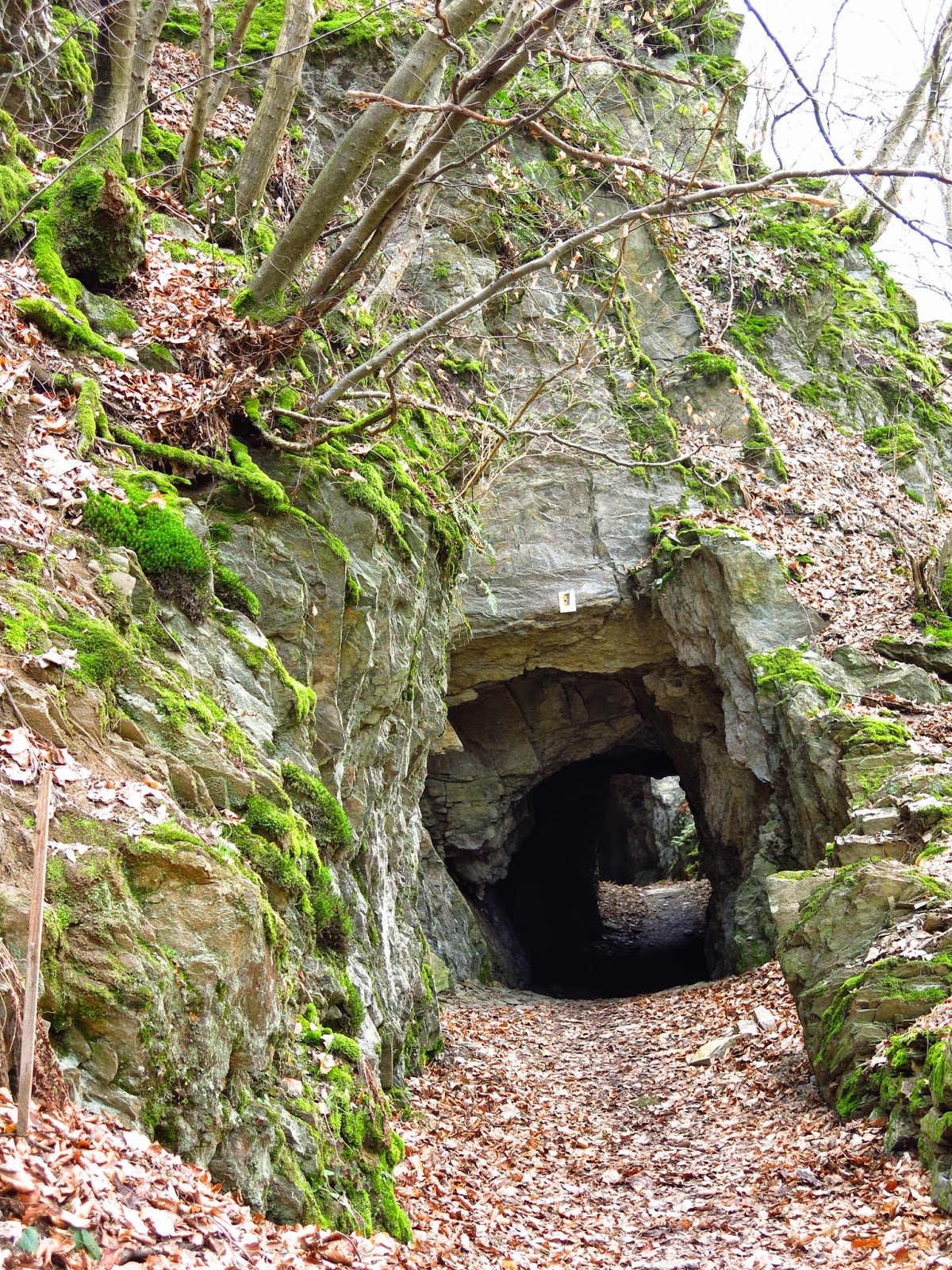
This is not only a place for birds, but also for wild flowers, foxes and deer, boars, butterflies and berries. The slate roofs of the few houses merge into the surrounding hills, which are pock marked by former quarries. Slate is everywhere. A place for nature trails, long distance walks and innumerable castles, either ruined or restored, on every strategic hilltop. 


One of many castle ruins
 The trails leads through tunnels
Sheer slate cliffs
The steep climbs in these hills tax my calf muscles which are used to flat land. Being alone, at the very end of a tiny village without any neighbours, doesn't frighten me but feels exhilarating. And there is the silence. I have known this house full of the bustle of people, a warren of adults and children, many of them new family units, ever changing like musical chairs. An abundance of food, of laughter, BBQ's, mad plans, fast drives into the nearest town just for an ice-cream after a meal of steak and salad, fish, burgers and sausages. Mountain bike trips, children splashing in the temporary swimming pool or screaming down the water slide, as the house is built on a steep incline; the roaring of quads tearing the mysterious silence of the woods to shreds. Bird watching, long walks, muddy boots, pop music, that is how I know it. Now all is calm. It took some time to make that large space my own, replace the emptiness with serenity, accept the continuous creaking and the little explosions of this house made of timber as friendly: the expansion and shrinkage of the wood this house is built of, the sturdy beams; the heavy thuds of snow sliding off the tiled roof and falling on the veranda or the ground, like the menacing footsteps of a giant. I have filled the house with my own music, the iPod for once coming in handy, my CD collection transferred to this small machine contains music for weeks.
The "Hahnenbach" with its muddy trail
There is no threat in walking these hills, woods and valleys alone. Nobody else is there, castles and fortifications are closed, former mines not yet open for tourists, neither are the small cafes. Nature is itself, unencumbered by day trippers. If I slip and hurt myself, there will be no help at hand.
Being retired should mean being free, without an agenda, without obligations. But I have taken on so much – of my own free will – that sometimes things get on top of me and there is no time to relax, to unwind. Planning to fit everything in becomes very tiring. At first it feels odd having no access to internet, no email, no landline. But gradually it feels as if a heavy burden has been lifted. No one can contact me easily, nobody can put demands on me here. I can think undisturbed, walk the steep and slippery trails, careful not to slide down on loose slabs of slate. Walking along the small stream seems easier, but is dreadfully muddy as the river easily overflows in its narrow river bed.

 Views from the house
I was very reluctant to come here. Lethargy had taken over. But once on the road the exhilaration of freedom took hold of me. A car is a small world, a bubble into which no one can penetrate. It was a lovely day, the promise of an early spring, the sun bright, branches of trees thickening. Once in Germany past the industrial area which the “autobahn” (freeway) skirts, the land opened up and there were wide vistas. The blue sky putting on an ever changing show of white cloud formations, each one spectacular. The rolling hills, scattered villages, the river valleys which I crossed, the pine woods and the vineyards, still bare, they filled me with happiness, especially as there are no sound barriers along the road but a free view of the countryside. Even the modern windmills looked like an elegant corps de ballet, in synchronised movements turning round, the tips of their three arms painted a glorious red, showing off their pointed finger nails. In this wide open landscape the tall windmills didn't seem to scar the landscape but added a beauty of their own. Is it the expectancy of the place one is heading for which gives such joy, or is the trip an end in itself, even if there is this nagging feeling of guilt, somewhere deep down. Another heavy footprint. But who can live life free of guilt? And I do need a car where I am going. There is no public transport to speak of, no village shop, not even for the bare necessities of life.
 Kirn Castle, another ruin
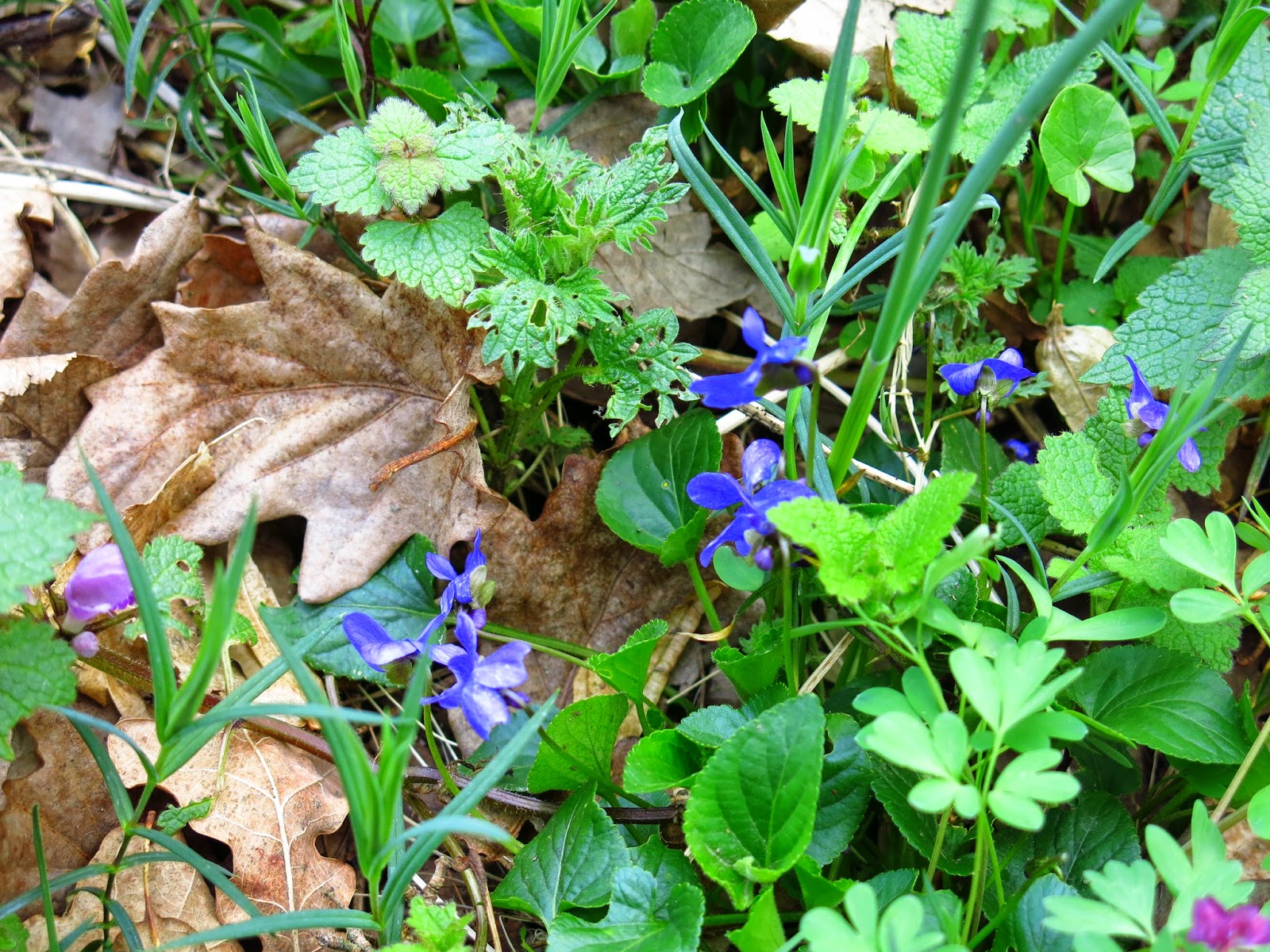
The walks are lovely. Although the trees are still bare, the undergrowth is a riot of subtle colours. Blue violets, some purple plumes of flowers I don't recognise, wild anemones and yellow cowslips. After an evening with hail and sleet and night frost, they just hang their heads and close their petals, as if hugging themselves. But when the sun comes out, they shyly open up again while still surrounded by diamonds of melting hail stones.
 Cowslips and wild anemones
And there are some very old and picturesque towns
 Herrstein


Sunday, 6 April 2014

Travelogue

Today the postman delivered the second volume of the book I wrote about my trip through Canada in September-October 2013. It has taken me a long time to compose these two volumes. The scenery is so breathtaking in places, and I took so many pictures, that selecting the ones I really wanted included in those two books was a difficult decision. And still I do not know if I made the right choice. Besides, I know I am always disappointed when a book I have put so much thought and effort in finally arrives. Seeing pictures on a computer screen or nowadays on a big television screen is very different from seeing them in print. And those prints not even on glossy photo paper, but just on high quality paper in a 'normal' book, as illustrations. It is a choice I had to make as I also wanted the journal included which I wrote during that trip.

For those interested, here are the addresses where the books can be (pre)viewed. The text is mainly in Dutch, so of no interest to most people. But if any of you plays with the idea of taking a trip through Canada, one of these books may perhaps be interesting because of the pictures.


Monday, 17 March 2014

Tallis Scholars

Unexpectedly attended a concert of the Tallis Scholars on Sunday afternoon. What joy! What beautiful voices and music. Palestrina's Missa Assumpta est Maria, Tallis, Byrd, and more modern Arvo Pärt and Eric Whitacre. Even Allegri's Miserere sounded fresh, new and extremely moving with the choir (just 10 voices) split up and located in three different parts of the concert hall. Marvellous concert, wonderful Sunday!
Here is a recording of the Tallis scholars singing the Missa Assumpta est Maria.

Thursday, 13 February 2014

Zwolle Revisited

There are towns and places which do not lose its attraction. One of them is Zwolle. An excellent choice for my free-travel-day. Zwolle has a museum, De Fundatie, which has recently been revamped, or rather extended. On top of a neo-classical building with Greek columns, resembling a temple, an extension has been built which looks like a Zeppelin or a stranded whale. I was curious to see the interior of this strange hump and so I took a train to Zwolle. The building looks interesting from across the star-shaped moat surrounding Zwolle. But I approached it through a street with attractive historic buildings and thought it looked distinctly odd. 
Several pictures of Museum "De Fundatie"
 The Greek front
 The window from which offers an interesting view of Zwolle
 Once the Palace of Justice and now a Museum of modern art, it has an interesting collection of art and some changing expositions. Standing in front of the entrance on the side of the town, I must admit it looked impressive.  I did look at the art exhibitions, but in fact was more fascinated by the view from the window in this oval extension, a view of Zwolle’s town centre, to the right of the Sassenpoort through which I entered the town, and to the left the Basilica of our Lady, made famous by Thomas a Kempis and by its tower, called the Pepperbox or rather Pepper Salver, as it looks like one. It was a clear day, till later in the afternoon, so I had a good view, also of the restaurant and lunchroom down below where I started my day with coffee and cake. There are two levels in this extension, which afforded different views.
 The Pepperbox tower of the Basilica

Of course there is more to Zwolle than just the Museum, quite a lot more in fact. But I did not climb the Pepperbox, and did not go inside the Basilica which I usually do when I go to Zwolle for the day. I just did some window-shopping. There are a large number of specialist shops with bags and leather goods, crafts, a shop selling products from countries which once belonged to the Hanseatic League as Zwolle did, and many other interesting shops.
 The "Sassen" Gate and the canon "protecting" the town
Another reason for choosing Zwolle was the new bookshop. A well-known bookseller and publisher of art books, Waanders,  has taken over a historic church and made this into a wonderful shop, Waanders in de Broeren, thus preserving the very interesting interior and making it accessible to everybody. The pipe organ is still there in its full glory and organ recitals are given regularly. 
 A view from the cafe towards the organ, and right: a view from the organ towards the choir, now a cafe
 The organ
In the former choir is a very nice lunchroom and coffee corner with good food. The different floors on one side of the church are themed. On the floor with cookery books, there are also related products on sale. The Music floor besides books offers CD’s and DVD’s, there is an Art floor with an exhibition, and a floor with stationary and writing materials. For me the beauty is the ceiling with its paintings of saints and noblemen, which can now be better viewed than ever before from one of the higher floors. St. Caecilia, my favourite, is also represented.
 Different departments on different levels
Of course I couldn’t resist buying several books. Amongst which a book about the history of this church and the paintings on the vaults. Something to study on the train back home, when it was dark and wet and very windy. It was a good day, in spite of my aching arms which had to carry the weight of cd’s and books and hold up an umbrella against the strong wind and heavy rain - which pelted down later in the afternoon- , while my handbag was blown off my shoulder. Fortunately I had a seat on the train and plenty of time to relax and besides reading, observe my fellow passengers.
 
  The paintings on the ceiling and vaults. Right below: St. Caecilia


Tuesday, 4 February 2014

Candlemas, Sunday February 1st

Candlemas, marking the end of the Christmas period. The presentation of Jesus in the temple, when Simeon took the child in his arms, and spoke the words which we sing at each Evensong, the Nunc Dimittis, known as the Song of Simeon.

Lord, now lettest thou thy servant depart in peace, according to thy word, for mine eyes have seen thy salvation, which thou hast prepared for all people...

The more poignant as we had just learned that one of the oldest members of our church choir had died the evening before, on her birthday February 1st. I sang the Nunc Dimittis for her, who had been a chorister all her life, first in England where she was born, later in  Holland where they moved because of her husband’s job and where she raised her two boys, one now a musician, organist, pianist, composer and choir master. We, the choir, will sing this week at her farewell service, celebrating her life. She was quite a character, and will be much missed. When I celebrated my 60th birthday together with a friend from church, she sang a solo, accompanied on the piano by her son. The illness which killed her in just a year or two was horrible. Mercifully an end has come to her suffering, which cruelly also robbed her of her voice, which had been so important to her throughout her life. May she sing the Gloria in the angelic choir.

Friday, 31 January 2014

A visit to family and friends

They are not exactly New Year resolutions, but I certainly intend to visit elderly family members and friends more regularly this year. On a sunny day, an exception this winter, a winter hardly worthy of the name, I drive up North expecting to enjoy the scenery. But even before I reach Schiphol, mist changing into fog changes everything into an old black and white photograph, with many shades of grey. No horizon, no high-rise buildings in the distance, but a fading picture. No view of the former IJsselmeer, except for the choppy waves under the high bridge across the lake, where a strong wind from the East threatens to blow us off course. Islands seem far away, the villages built on them not visible. Holland for once seems wide and empty. When I have reached the most northern provinces, an area which I usually love, it isn’t much better. The ploughed fields look drab and dark, the emptiness only broken by rows of bare trees in the distance, as if drawn with a sharp pencil against the grey sky. No clouds, no sun, no colour, just black and grey.
As always I take a detour through the peat and reed lands, via narrow winding dikes flanked on both sides by water. Most of the reeds have been cut, so even here the land is uninteresting. No reeds moving in the wind, like undulating golden waves. Black water, dull yellowy stubbles, no traffic, no cyclists, no flowers and no colour. In one place there are still stacks of reed bundles which make a nice change on this wintry day and break the monotony.

   A bit further on, in a rural area, along a beautiful tree lined country road which I usually love, there are many houses for sale, small farms, several sheltering under thatched roofs, some converted, some authentic, some the worse for wear. Usually I have visions of living there, and I am jealous of those people who actually do! But this time the land can’t inspire me. I realise that what may be attractive in summer and spring, and even covered in snow, must be rather lonely at this time of the year when everything is bare and flat and empty and robbed of colour.
   It is good to be warmly welcomed by my relatives, to share lunch and drinks with them. Once so enterprising and full of life and energy, they seem to have aged visibly in just a year’s time. It is right I made this special trip.
A nice sculpture of villagers chatting in front of the old church of Oldemarkt, a picturesque rural town I pass through on my way to and from my relatives in Vledderveen
I leave late in the afternoon and after a phone call pay an unexpected visit to friends who live en route. Here we luxuriate in front of a welcoming open fire, trying to forget the numbing cold outside, lighting candles against the dark afternoon. We haven’t seen each other for over a year and enjoy each other’s company and stories. We share nibbles and drinks, and a nice home-cooked meal. When I leave, I am filled with warm feelings. It was good to go and see people. We all seem to be too busy. But friendship and family are the most important things in life, although we tend to forget that too easily as life and the daily grind get in the way.

   This grey day has certainly turned into a very happy day.

Monday, 20 January 2014

Two house concerts on historic instruments.

A strange week. My guest has left, so normality should return. Instead everyday of this past week I have either visited or been visited by friends I have neglected for a long time. It is lovely to see different friends each day, either here or at their homes. Add to that a backlog of paper work, fitness classes, choir practice and two house concerts: A very full week indeed.
Of course the concerts were the best part of the week. Both were in the houses of friends in The Hague. They have the fortune to live in old and elegant houses, with big, high ceilinged rooms which can easily be converted into or used as a music hall. The first concert was a recital for fortepiano, fourhanded. 
The Duwaer
Not only on a historical instrument, but the house itself is like a museum, and seems to transport visitors to former centuries. Gilded mirrors, dark painted walls, showcases with beautiful and expensive china, paintings and candelabra’s, it all gives the visitor the feeling that he has entered another age when he steps across the threshold. But it is a family home and people live here. My friend restores historic pianos, harpsichords and pianofortes and also organises recitals and concerts at home and in interesting historic buildings, be it castles or buildings in old towns such as Dordrecht and Amsterdam. 
Two of the owner's historic instruments, the Duwaer on the right
It is a delight to go to those concerts, not just for the music, but for the whole atmosphere and his interesting and witty introductions. This time the recital was played on a Duwaer, a pianoforte built in Amsterdam around 1830. It has an amazing sound, just as loud as a grand piano. The two musicians formed an interesting duo: a tall Finn, Ere Lievonen and a very small, elegant, young dark haired Italian woman, Tullia Melandri. Their performance kept us spellbound on our old/antique? and uncomfortable chairs. The nice thing is of course the wine we share during the interval and after the recital, together with the musicians. They draw us into their music; tell us about performance techniques, their choice of music and how they manage to work together. They played late 18th and early 19th century music, Hummel, Mendelssohn and Czerny, of which the latter wrote more than piano etudes for unwilling students. The second part of the recital was reserved for Schubert. 

Ere Lievonen and Tullia Melandri
The other event two evenings later was a house concert by the Hopkinson Trio.

The Invitation
They played Mozart, Telemann, a cello concert by Stephen Paxton which was most interesting, and three compositions by Haydn. The musicians were very involved with their public, explaining a composition, or in the case of the violin player the difference in bows and how that influences the sound of the violin. Here too were drinks and coffee before, after and in the interval of the concert, as well as pleasant and interesting company. But in this case the concert was on the ground floor of a spacious house with lofty ceilings, which the owner had turned into a real concert hall and gallery. He no longer lives on that floor, so the atmosphere was totally different from that of the first concert.
Cynthia Freivogel played Fantasia 7 by Telemann, a solo concert for violin.
On this video Cynthia is playing one movement of the Fantasia. At the recital she played all four movements: Dolce, Allegro, Largo and Presto.
On both occasions I tried to take some pictures, but since I did not use flash they did not really come out well.
 Cynthia Freivogel and Fred Edelen
 
Christina and Fred Edelen

A very exciting and rewarding week, ending on Sunday with a two hour confirmation service followed by a pot luck lunch during which we enjoyed the delicious sweets the British are so good at. And of course the interesting hot dishes prepared by people from many different parts of the world and different backgrounds. I do not often stay for the monthly family lunch, but when I do I am always surprised by the wonderful food and the skills of the various cooks. 
I was also surprised that a service which took two full hours did not seem very long at all. The sermon of the bishop was most interesting and the way he confirmed the candidates and addressed them was very personal. An unusual Sunday.

Followers

Blog Archive