Saturday, 21 February 2015

Coventry

A weekend of singing the services in Coventry Cathedral with the ECS choir.
The history of Coventry Cathedral is most interesting. It was bombed in 1940, and immediately plans were made to rebuild it. Germany also rebuilt historic city centres and cathedrals. However, in Coventry it was decided to leave the ruins as they are, and to build a new and modern cathedral, adjoining the ruins and forming an L-shape with them. 

 The cathedral ruins by night and by day

This also means that the cathedral isn’t built East-West as is normally the case. Through a glass wall engraved with angels and apostles one looks out at the ruins. The cathedral is meant to be a symbol of hope and reconciliation. 
A view from the ruins towards the glass entrance and wall of the new cathedral
 Looking towards the ruins through the glass entrance wall or screen of the cathedral
This weekend the services were in commemoration of the bombing of Dresden, 70 years ago, in 1945. Apparently both cities are twinned. On Sunday a 96 year old Englishman who had fought in the war in Germany, gave testimony of how his whole attitude changed when he saw mothers and children being killed. Since then he has been a staunch advocate for reconciliation and peace.
Lady Godiva 
It is a strange city. The heart is almost gone. Ruins are replaced by concrete buildings, a material which in the sixties was considered to be indestructible. It seems there was no town planning. Apart from the cathedral and the ruins there is a very big shopping centre, consumerism being the religion of our time. A statue of  Lady Godiva connects the old part with the new. There are some very old 14th and 15th century buildings scattered across the city centre. They have escaped the blast. One street which seems reasonably intact and looks very lively during the evening, each old house harbouring a restaurant, looks very dilapidated during the day with dirty window frames and grids to protect the windows. Besides the gaudy blue and yellow colours of IKEA are towering over the humble medieval houses.
A ring road is built around the heart of the city, a nightmare! It is too close to the centre and looks like the arteries around the heart, so close that it seems to strangle the city. The many loops, fly-overs and tunnels are so close together that before I and others realised we had to get off, we had missed our exit – many times that is. We went around innumerable loops and roundabouts. It was like going seven times round the walls of Jericho. But the ring didn’t fall! I wasn’t the only one to have trouble finding the hotel which was within sight but unreachable. It was just outside the ring road, and only a 12 minute walk from the cathedral, but on foot it meant negotiating two tunnels and a bridge to cross the ring, not very nice at night!
A view of the choir stalls with the crown of thorns as a canopy, the pipe organ on both sides and the tapestry, unfortunately partly covered by scaffolding.
 Left: choirstalls. Right: pulpit and the crown of thorns

The acoustics in the cathedral are very poor for singers, and we could not hear the other side of the choir, but to those sitting in the nave it seemed to sound fine. The choir stalls are open, crowned by pieces of wood which represent Christ’s crown of thorns. To me they looked like birds, a flock of doves representing the holy ghost. Wrong interpretation apparently. The whole cathedral is full of symbolism and very fine modern art. But I wondered about so many things.
 The exterior of the Chapel of Unity
 Christian symbols in the marble floor of the Chapel of Unity, a present of the people of Sweden.


The Dove of Peace in the middle under the glass altar. A ball placed on the floor rolls to the centre.
The cathedral is a symbol of reconciliation, yes. But since then so many wars have been fought and are being fought, even in Europe near “home”. It is the hope of the sixties and seventies, when we were determined and believed that war should and would never happen again.
 The Chapel of Christ in Gethsemane
The Chapel of Christ the Servant
Amazingly there was only a congregation on Sunday at the Eucharist in spite of the special weekend. It seems Coventry is not a tourist town. In the large basement of the cathedral there is a restaurant and a coffee shop, but both were closed during our stay. Probably because of half term.
The beautiful window in the Baptistery
Nevertheless, it was a wonderful experience singing in this special cathedral which I had always wanted to see and had heard so much about. Such an unexpected joy that now I could even sing here three Evensongs and the Sunday Eucharist.
A happy choir on the stairs to the Song School, beneath the charred cross, two burnt rafters from the old cathedral which fell down in this shape
We were given a very informative tour of the cathedral, which we enjoyed.  Unfortunately the big tapestry of Christ dominating the cathedral was partly concealed by scaffolding as the tapestry had to be cleaned and vacuumed, a task performed every ten years.
 Some old buildings in Coventry


Coventry was well known for its car industry and cycle works. The hotel we stayed in was a former cycle works, a historic place in its own right.

Wednesday, 21 January 2015

Another farewell

Saying goodbye
Her head peeping out from under the bedcovers is like a bird’s, narrow and thin. The huge, dark rimmed glasses wider than her skull, a pair of giant eyes. She looks healthy, her skin the orange of a cheap fake tan. Hepatitis does that. It is shocking to see her so vulnerable, emaciated, she who once was so sturdy and strong. But she hasn’t lost her sense of humour.
I had not expected her to be completely bedridden yet. The hospital bed seems too big for her now small frame. She is happy to see me, and so are her husband and daughter, who look after her. Her daughters take shifts helping their father caring for her during the night. Even an emaciated body is a dead weight when helpless.
It was a long drive, and I am still very tired after long flights from another continent. But I am glad I came. We talk about former times, all the things she has always done for others, her years as a home help, a social worker, a surrogate mother replacing the sick and being in charge of strange and large families. About how I came into her family and how she accepted me without asking questions. About the time before I got to know her, when she offered a home to nieces and nephews in times of need, never complaining but enjoying the vast brood under her roof. How she taught my stepdaughter to knit, an art foreign to her own mother.
She is content, tells me that people have asked her if she is afraid of dying. She isn’t, she says. She has tried to live a useful life, and she doesn’t know what is awaiting her. A still practising catholic, she just doesn’t know, whatever the priest might tell her. ‘Nobody has ever come back, so how can anyone know for sure’, she repeats many times. I do not have any answers. Yes, she has always been helpful, caring, dominant but fair, and altruistic. Even now that she is dying, she is phoning family and friends that her time is up, so that they will be prepared and not be too shocked when they hear about her death. She tells me again and again that she is not afraid. I haven’t asked her that question. Should I have? Does it help? Would it ease her passage from this world into another? I just thank her for accepting me, for giving us her house when my husband, very sick, was in a wheelchair and we needed a break. Her bungalow was the perfect place. She and her husband took off in their caravan so that we could enjoy their home.
I feed her little pieces of a warm croissant, with a spoon, her always busy hands useless now on the bed sheets. In between bites she sips water from a straw. It is like feeding the tiny birds in my garden. Her daughter is very caring. ‘I changed her diapers, now she changes mine,’ my sister-in-law says with a wry smile. ‘It can’t be helped.’  I see my late husband, his hospital bed in our living room, his body, just skin and bones. They seem to merge into one another, the brother and the sister, a deathbed revisited.
Before the three of us sit down for supper, the daughter takes off her mother’s glasses and she closes her eyes, tired now after all the talking.
After supper I have to leave, for I have a two hour drive at best ahead of me on a dark, and wet night. I am glad I came and that we could talk. I kiss her goodbye. Will I see her again, except in another world, the New Jerusalem? I don’t know, and for her sake and her family’s sake I hope I won’t.

Two days later I get a phone call to tell me that the morning after my visit my sister-in-law has passed away very peacefully. I am sad for lives that end, friends and family leaving this world, but glad she is now released from a body which no longer served her.

In Paradisum deducant te Angeli.

The Gregorian chant


From Faure’s Requiem Mass


Saturday, 3 January 2015

Canadian Museum for Human Rights

Cold
It is cold, really cold. What can one do when it is too cold to go for a walk, when it is a major expedition to venture outside? Fortunately, apart from the Nutcracker at Boxing Day, there is this pile of unread and very interesting books, and there are museums.
One of the latter, the Canadian Museum for Human Rights, is brand new. Even if there were no exhibits, the building itself is spectacular. From the outside it looks like a turtle or a turban. Inside there is glass and steel and there are lots of walkways crisscrossing the building, gradually leading to the different floors and the very top of the museum. It seemed we walked for miles and it was enough exercise for one day. 

In fact for me the architecture, so the building, was far more interesting than the exhibits, although any available new technique was used. The views of the city, the frozen Red River and the interesting construction of the footbridge, alluring in summer, are quite spectacular from behind glass. The exhibits may be more interesting for a younger generation and for Canadians and Americans. For me, a European citizen, not much was new.


As can be expected we were not the only visitors that day. Given it is holiday time and very cold, and this museum has been given a lot of attention in the media, you can imagine the long lines for the ticket office and the coat check.
 Looking through glass, on which the construction of the museum is reflected. 
 A train crossing the bridge across the Red River
 Looking down the steel and glass stairs
Footbridge with restaurant across the Red River leading from the British to the French part of the city
It was too cold by far to take any pictures outside, as my fingers were starting to hurt and stiffen the moment  I took off my gloves. Nevertheless I took a few, especially at sunset when the top of the footbridge tower and the top of the roof of the museum as well as its tower were coloured a deep red, a magic moment.
 Sunset


Wednesday, 17 December 2014

In Memoriam

Losing two friends, two women within a week, is quite sad. It is Advent and I sing again and again of the great mystery, “A great and mighty wonder”, which has befallen us. The eager expectation of the coming of Christ, the Light in the darkness. A darkness which we experience literally as November, December and January are indeed very dark and dreary months in this part of the world. Months when we need artificial light almost all day long. Just as well Christmas and the winter solstice come together. We can light candles, make the darkness bearable, look forward to the true light. The light of the Christ child, which has nothing to do with our pagan rituals and festivities: the giving of presents, consuming too much food, drinking far too much wine. It is the hope of new life, of eternal light, the living light.  It is also the warmth, love and comfort of family life, of friends. Friends leaving us during such a period of happy expectation, is a shock, feels like a betrayal. But perhaps my two friends are the privileged ones, perhaps they see the light before we do. Don’t we also sing that those who have died need no lamp, no light, for Christ shall be their light, their all?
The problem is not the friends who died, the problem is those who are left behind, the unfinished business. All those things we wished we had said to them when we still could. And all those things we wished we had not said.  Where they are now, do they know of our good intentions, do they know our thoughts? Does one of my friends know I wrote her a letter telling her how much I had appreciated her friendship and how sorry I was for the things I had done which seemingly had offended her? Hoping she would feel the peace that passes all understanding. That she would be surrounded by it. I wrote that while she was dying, unknown to me. I delivered it at the hospice, only to be told she was no longer among the living. She had seen a great light before I had. I am still waiting for that Light, the Christ child born on Christmas morning as the Bible story goes. I hope that I can sing for her. Sing with the choir at her memorial service. But if not, if I am already travelling as I have planned, I will sing for her wherever I am. Friendships, none of them perfect. But there was mutual love, care, and understanding I hope.

One of the friends I had known for over 56 years! Once I was her bridesmaid. She had three, made all the dresses, also her own. She was proud to have me and I was honoured. Enough? She was poor, I was rich in comparison. She struggled through life, suffering from depression but never giving up. Doting on her husband, her two sons, being hospitable and welcoming to anybody in need. Was I good enough to her? Did I do enough for her? Did I show my admiration, my love for her? Or was I a bit aloof because of her very poor background? Questions which can never be answered now. I spoke to her for an hour on the telephone two months ago and she was so thrilled and happy although she had been ill for two years and knew that the illness would kill her in the end. I didn’t know about her condition. We had not really drifted apart, but lived too far away, lived such different lives. She was no letter writer so did not answer my letters. She thought her end was still far off, made plans for us to meet, plans for next summer when we would spend time together. I cannot go to her memorial service as I will be elsewhere. But for her too I will sing. Knowing her has enriched my life. Her optimism against all odds, in the face of unemployment, depression, illness and poverty, her zest for life, her kindness and her hospitality, her struggle to give her sons a better life, chances she never had, they have taught me a lesson. And I will miss her a lot.

Monday, 27 October 2014

A week in Cambridge

Cambridge, the Mecca of church music. Each college of the University has its own chapel where Evensong is sung every day. But some colleges are more famous than others, and their chapels more beautiful and impressive. The best known of course being King’s College, followed by St. John’s.
 Iconic images of King's College Chapel

 St. John's Chapel and roof
 I had the great pleasure of staying in Cambridge for a full week. Having friends there I was immediately “volunteered” into singing Choral Evensong with an unknown choir in a village church in Stapleford, just outside Cambridge. A challenge, but I knew the music and was really looking forward to it. It was such a privilege to be able to sing with another choir and see how and what they are doing.  In the morning I had been to Choral Eucharist in King’s College, and the contrast couldn’t be more striking. But both services were memorable and meaningful. Of course it is impossible to compare a country church with King’s College, a University Chapel full of choristers who are being professionally trained aiming to achieve perfection.
 Stapleford village church
The week was full of music. It started with a concert on Saturday night in which a friend played the viola. Not a bad start of the week! On Monday night I joined another unknown choir which was having one of the final rehearsals for a concert the following week. This was all music I did not know at all, amongst it many compositions by Joseph Rheinberger, so all I practised that evening was sight reading! Not bad to get a free two-hour training.
 Another picture of King's. No pictures inside the chapel.
Writing and listening to Evensong in the colleges were the only things on my to-do list, apart from seeing friends. Friends who live in Cambridge and friends who came to town to have lunch with me. Staying in this lovely house in which I felt like a pea in a pod, and being within walking distance of everything I wanted to see and/or do was a huge bonus. In one week I managed to attend five choral services in King’s College Chapel, three of them Evensongs. It could not have been better. I knew half of the music, and it was a joy to hear what it ideally should sound like. Being an alto, when singing I concentrate on my own part and can’t really hear the whole. But music, however beautiful, must be enjoyed within the context of the liturgy, otherwise it is hollow and just a meaningless art form. Sitting in a wonderful chapel where generations of young people through the ages have worshipped, adds extra meaning to it all. The music seemed to soar up, pure and bright in this high ribbed ceilinged chapel. The late afternoon sun illuminating the multi coloured windows and bathing them in a golden light. The golden pipes of the organ rising up high above us on the transept dividing the inner and outer chapel, fitting in perfectly. My eyes were drawn to the stained glass windows, depicting the story of the Bible in many multicoloured pictures, too many to take in in just an hour. It is a magnificent chapel, and although I went through St. John’s chapel and meant to go to Evensong there as well, I never did, the lure of King’s being too powerful to resist.
It was a week I shan’t easily forget. What privilege to be a student in Cambridge!

 Phone boxes, bikes and advertisements pinned to railings


Of course Cambridge was flooded with tourists, many of them Asians as we now see everywhere. And overrun by bicycles, not only ridden with a total neglect of traffic rules, but fastened to railings wherever one could find them, as were announcements of concerts and cultural activities. Cambridge isn’t just church music as it was for me, it is a city which is very much alive and busy. No chance to drive a car in the centre: it is strictly busses, taxis, bikes or pedestrians, who go in a steady stream from one shopping arcade to another one, the connection leading through a nice park. Shopping has become a pastime here, or perhaps everywhere in the western world. But although the place where I stayed was just off this pedestrian thoroughfare and had a supermarket round the corner, the street itself was blissfully quiet.


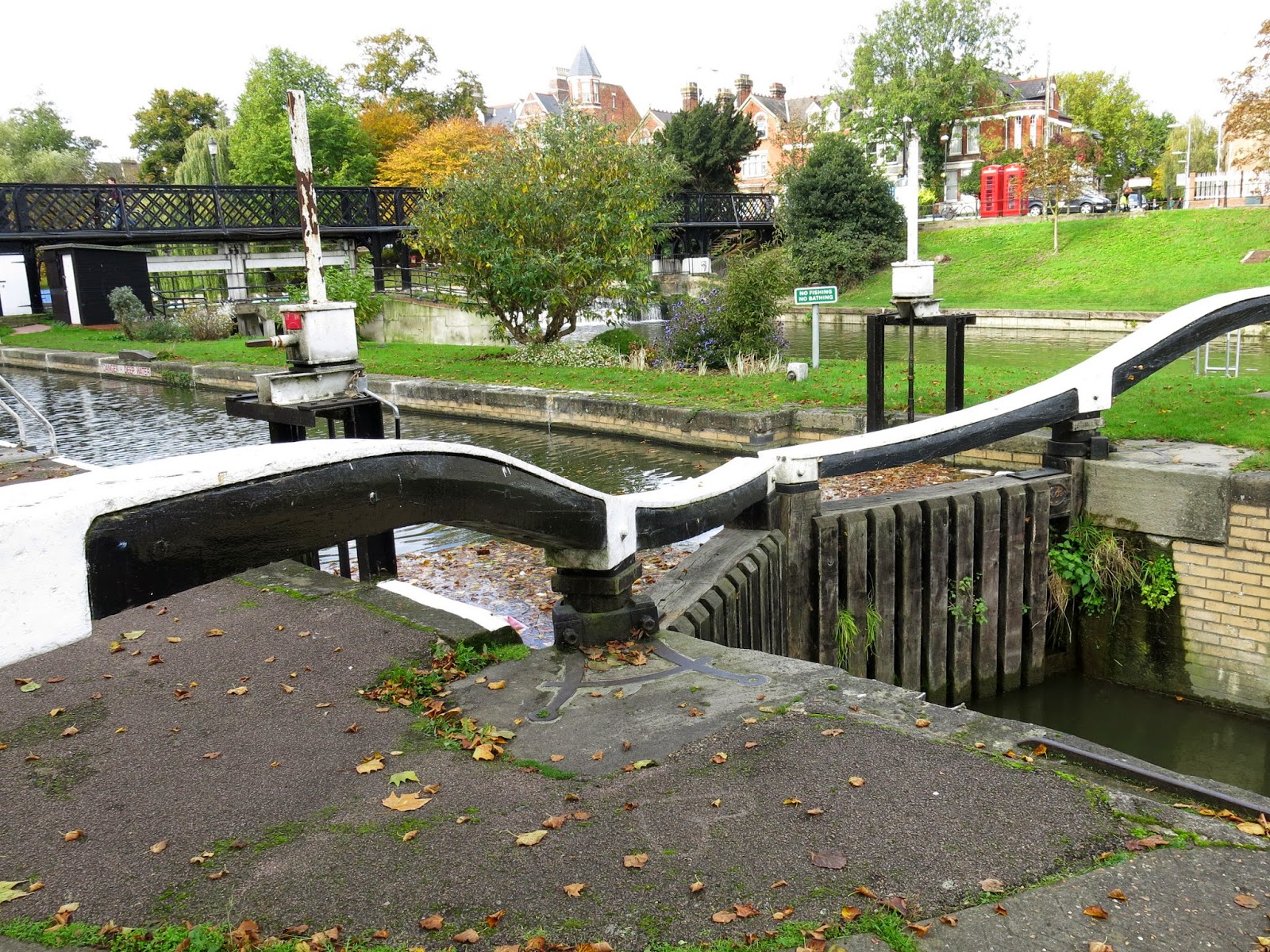
Narrow boats, punts and a lock on the river Cam

I was surprised by the many parks and green areas. I understand that large plots of land belong to the various colleges. The river Cam meanders quite a bit and many narrow boats are moored along its banks outside the built-up area of the centre of the city. Some looked very dilapidated and in bad repair. I suspect they are lived in by students, but don’t know for sure. Some had pot plants on the roof, and many had bikes on board, most of them rather old and often rusty. 
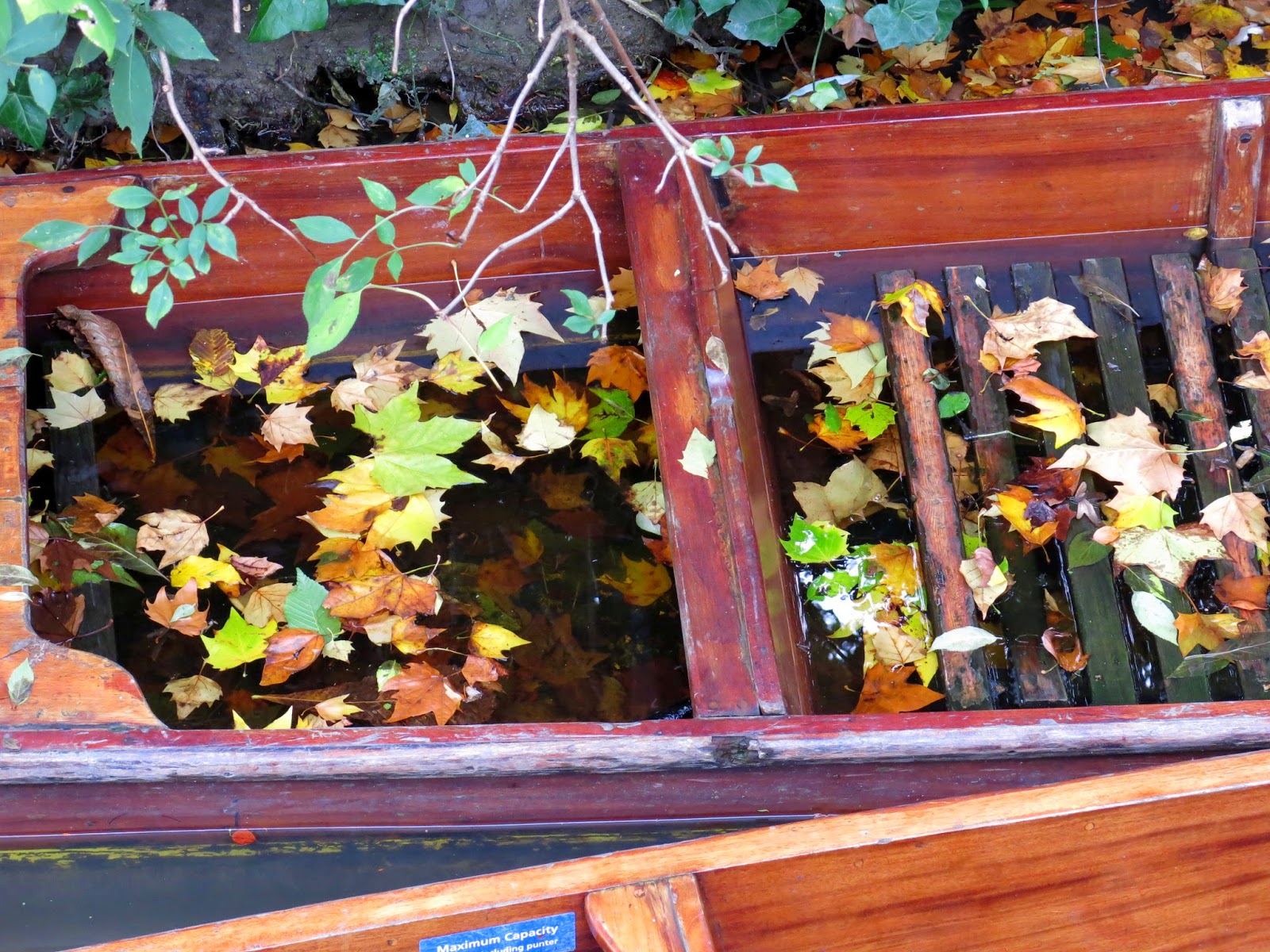
 Active punting...
 And punts in autumn mood.

The river is overcrowded with punts, every tourist trying to have a go. I even saw a Japanese wedding couple boarding a decorated punt. Not having a bike I walked and walked and really broke my own record. But it was very enjoyable. I walked to and through the colleges, to museums and through narrow streets, around the Backs and along the river banks, admiring the boathouses from the colleges on the opposite banks, each college having its own. I browsed in bookshops and music shops, but fortunately was limited in what I could comfortably carry home. Most of all I enjoyed getting a glimpse of life in Cambridge, and being able to take part in so many wonderful services and enjoying the great musical tradition of the Anglican Church.
 Typical houses and pubs at narrow street corners
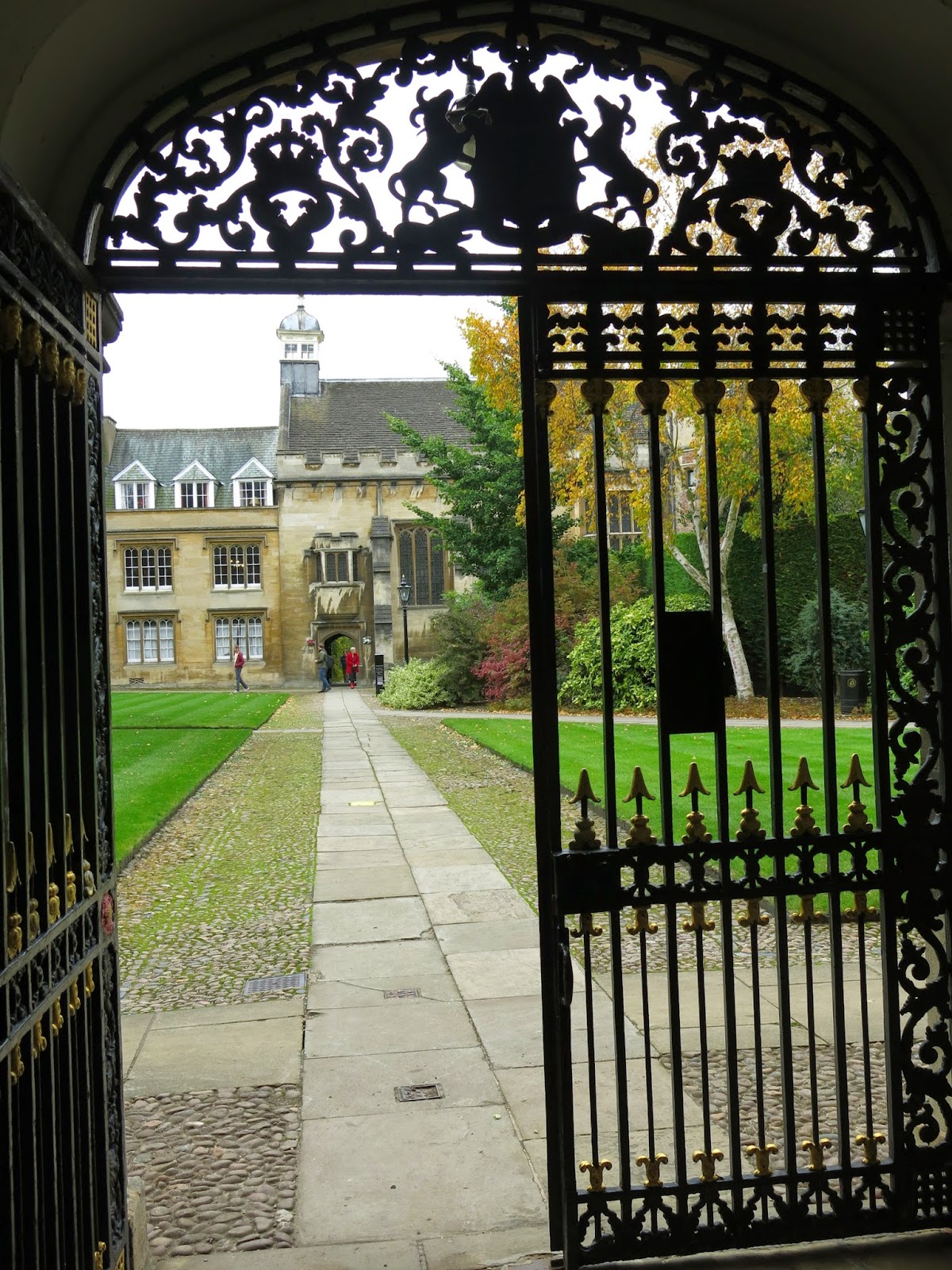
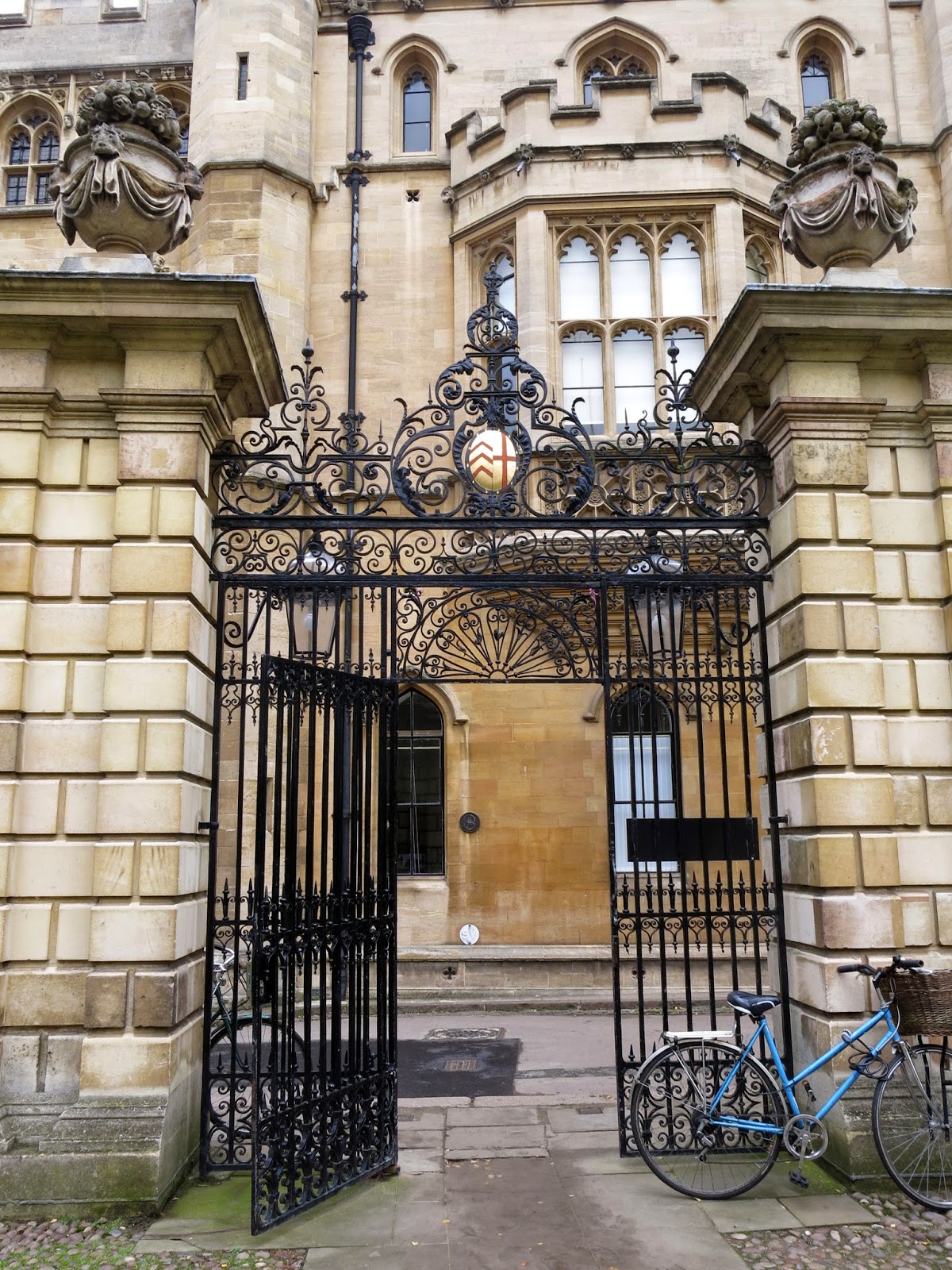
Gates and Doorways:
Magdalen College on the left,              and Clare College on the right
 Jesus College and gates

 St. John's College 
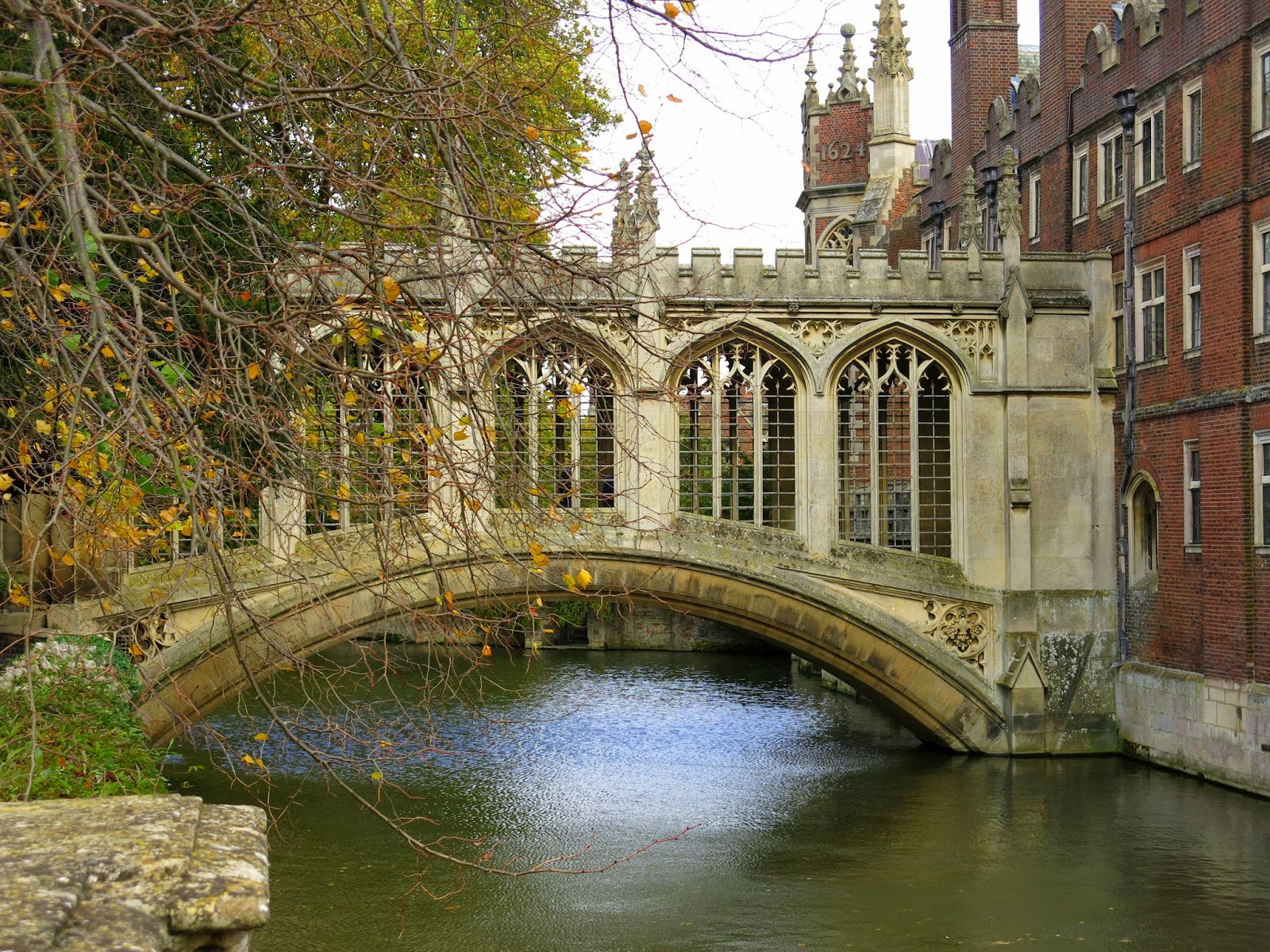
Below, The Bridge of Sighs

Followers

Blog Archive